
the work after the work
making sense of the existential post-PhD BONK

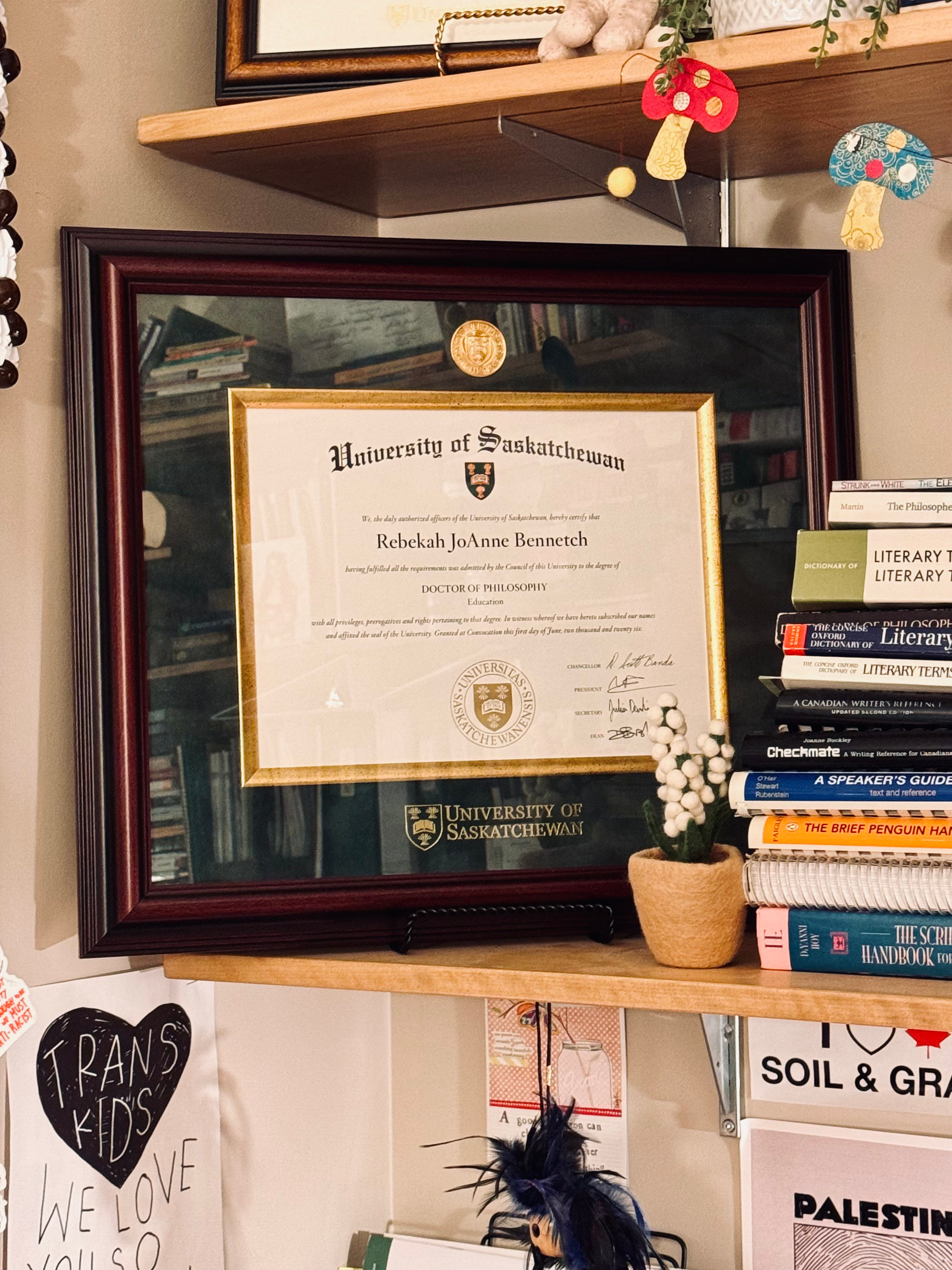
It’s been a while since I’ve spent time wandering through my thoughts on this newsletter page. These last few weeks of July have convinced me that I’m finally experiencing the existential BONK that typically follows the completion of a PhD.
After I defended and submitted my dissertation at the end of March, I didn’t have time to catch my breath before wrapping up four sections of the course I was teaching. Grading research reports, speeches, and exams flooded my days.
May became the month for networking and beginning to imagine myself as a consultant. My days filled with meetings, websites, and paperwork. Oh, and Mexico!
June brought my convocation AND the official launch of my professional communication consulting side hustle. Then I spent the second half of the month conferencing and learning in Europe.
July has been my month to rest and catch my breath. Apparently, slowing down has also meant finally having time to understand what these past several years of dissertating have given me. Maybe that is why summer has always felt like such an important season in my academic life.
I have always loved the slower, more restorative months of summertime in academia. Campus is quieter, reading feels less hurried, and there seems to be more space to think about who I am becoming + who I would like to be in the days ahead.
This month, in addition to my lovely writing retreat, I also participated in two online conferences hosted by organizations I find inspiring and genuinely kind. Both presentations drew from the findings of my doctoral research, and it was such a gift to share these ideas with supportive audiences and begin discovering what they might become beyond my dissertation.
The first workshop was part of Leading With Our Values: Cultivating Connection in a Time of Upheaval, an annual virtual gathering organized by colleagues and friends whose work I deeply admire. This year’s theme invited us to consider how we might connect more intentionally during such difficult times in the academy.
My workshop at this conference was called: “Cultivating Our Roots: From Survival to Sustenance in Higher Education.” Here are a few of the ideas I shared:
A performance-driven culture often privileges what can be seen (Tompkins, 1990). In academia, output is frequently recognized more readily than the less visible growth behind it. Over time, this can teach us to measure our worth through what we produce.
Moving from survival to sustenance in higher education begins by naming what matters to us internally. Many educators learn to survive the pressures of academic life by responding to its external demands. A more meaningful academic life becomes possible when we recognize the deeper roots guiding us and allow them to shape how we work.
But naming those roots is only the beginning. They also need care. Identifying our values is not enough. We need to understand and create the conditions that allow them to remain present in our work.
We had a great discussion about the visible parts of our practices and the deeper roots that keep us going as we move through the academic landscape. I really appreciated everyone’s generosity, particularly when sharing some of the more difficult parts of academic life.
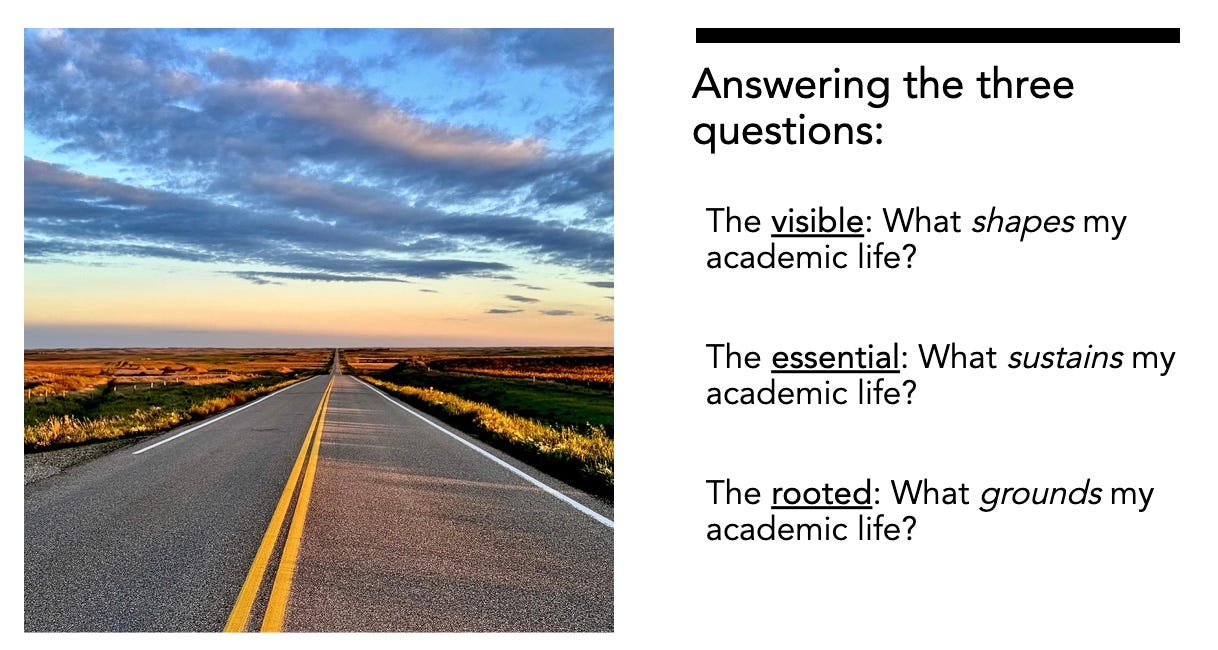
If you’d like to check out my slides, which are rife with photos I’ve taken of the grasslands, you can find them here: Cultivating Our Roots: From Survival to Sustenance in Higher Education.
My second workshop took place this morning as part of MYFest, a mid-year conference hosted by the organization Equity Unbound. The hospitality and intellectual curiosity of the scholars in this community inspire me in so many ways. Learning alongside them always feels especially restorative after spending so much time in environments where curiosity can be in short supply.
One of my favourite parts of being a member of Equity Unbound is the diversity of the community. Any time I attend a session, I can guarantee that at least three continents will be represented, and more often than not, we have people joining from six. That sense of learning across contexts also made MYFest an especially fitting place to continue a conversation I began there last summer.
My MYFest session last year focused on mapping some of the landscapes where we teach and naming the pressures created by the performance model. We considered where institutional expectations had settled into our identities and began identifying some of the values we wanted to reclaim.

That workshop was an important starting point, but my research eventually carried me beyond naming the pressures and problems of academic life.
My research eventually led me toward a different question: once we recognize those pressures, what helps us remain connected to ourselves while moving through them?
Here’s how I pitched my follow-up workshop for this year’s gathering:
Beyond the Stories We Teach By: The Stories That Help Us Continue
Rather than asking how we resist the pressures that characterize academic life, this workshop considers how we remain connected to who we are while navigating them. The goal is not simply survival, but a more intentional and sustainable way of living our academic lives.
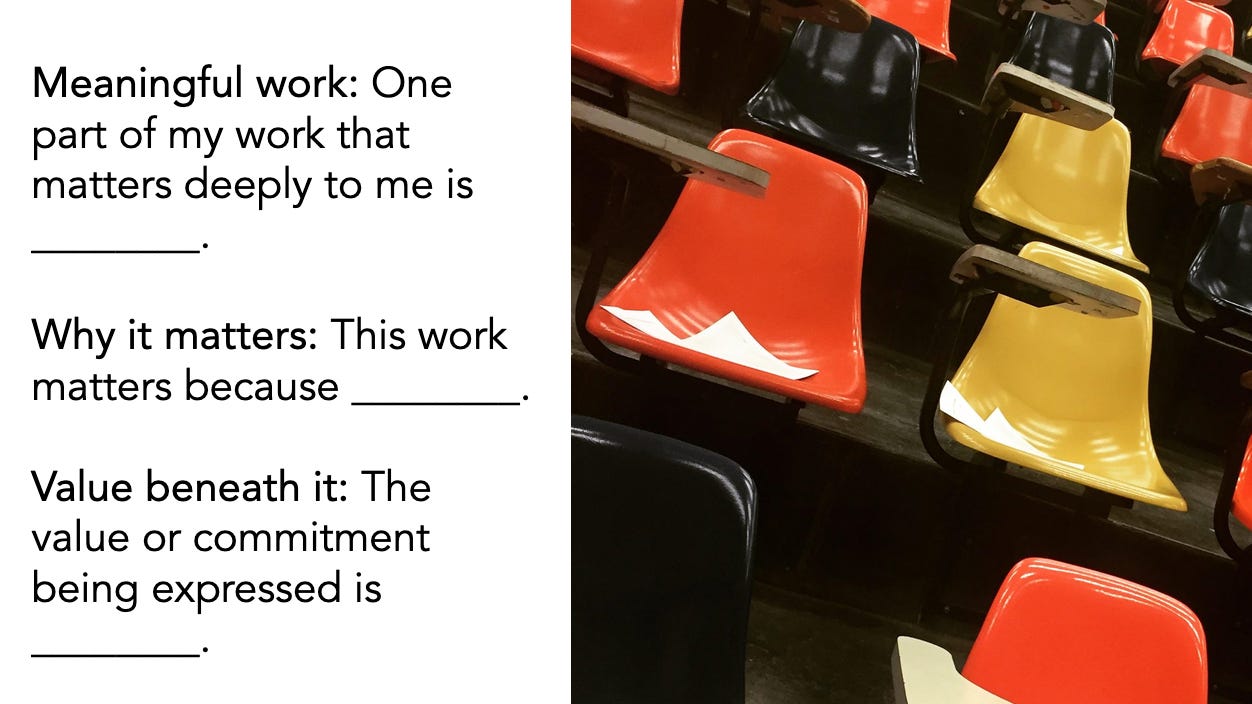
Cultivating Our Roots helped us look beneath the visible story of academic success and identify the work + values that sustain us; today’s MYFest workshop asked which stories, relationships, and conditions help us remain connected to them over time.
You can view the slides from today’s workshop here: Beyond the Stories We Teach By: The Stories That Help Us Continue
The slower days of this quieter season have given me space to notice how the questions behind my doctoral research continue to evolve.
I began my doctorate by trying to name and make sense of the stories and pressures that shape academic life. Now, I find myself much more interested in what happens once we can see those pressures more clearly: How do we remain connected to ourselves as we move through changing landscapes?
The longer I sit with these ideas, the simpler they seem — and sometimes I worry they sound almost painfully obvious:
The institution may define what counts as success, but it can never decide what makes our work meaningful.
Maybe what comes next is learning to trust what matters, even when it is not what gets counted.
Things that have brought me joy in July:
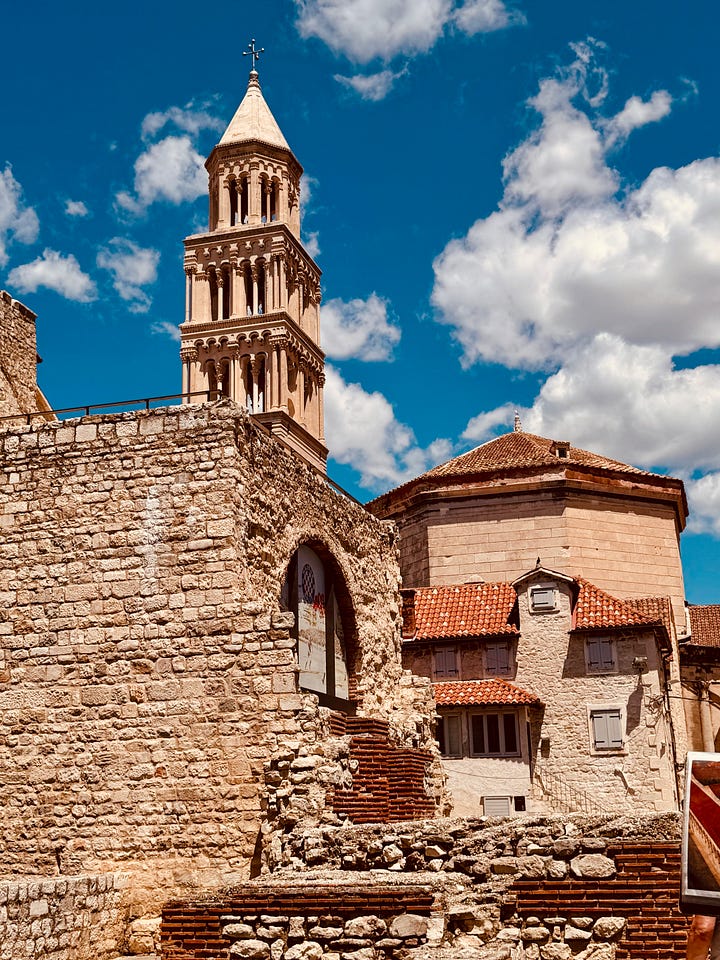
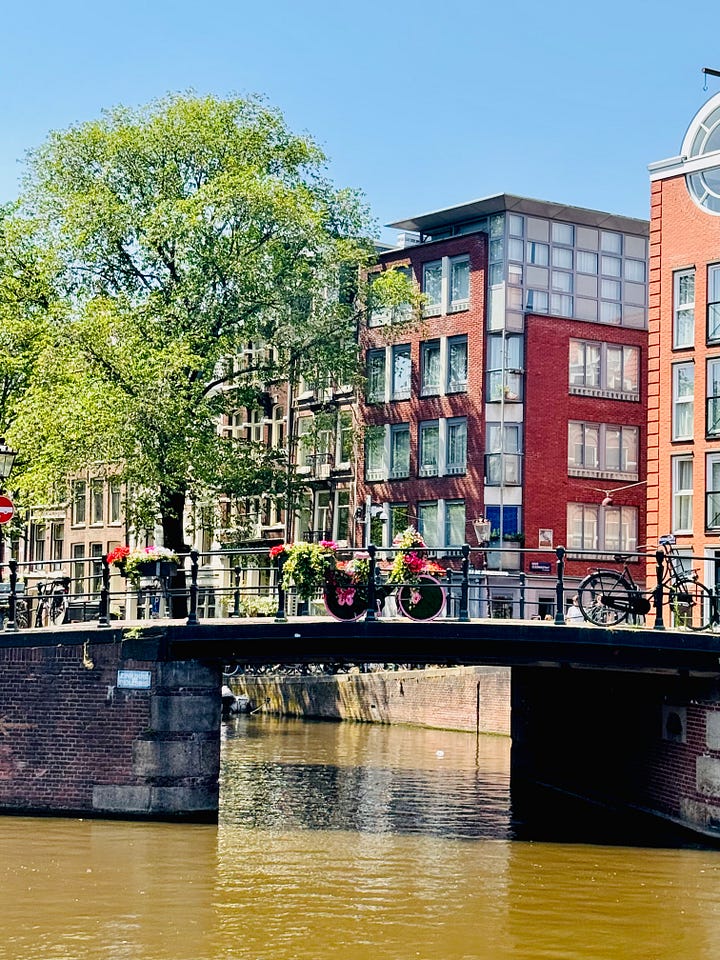
I’m still carrying a bit of a travel hangover from Amsterdam and Croatia. Every so often, I find myself daydreaming about eating gelato in a Roman plaza, or remembering the energy of joining a crowd to watch World Cup matches in Zagreb’s city centre.
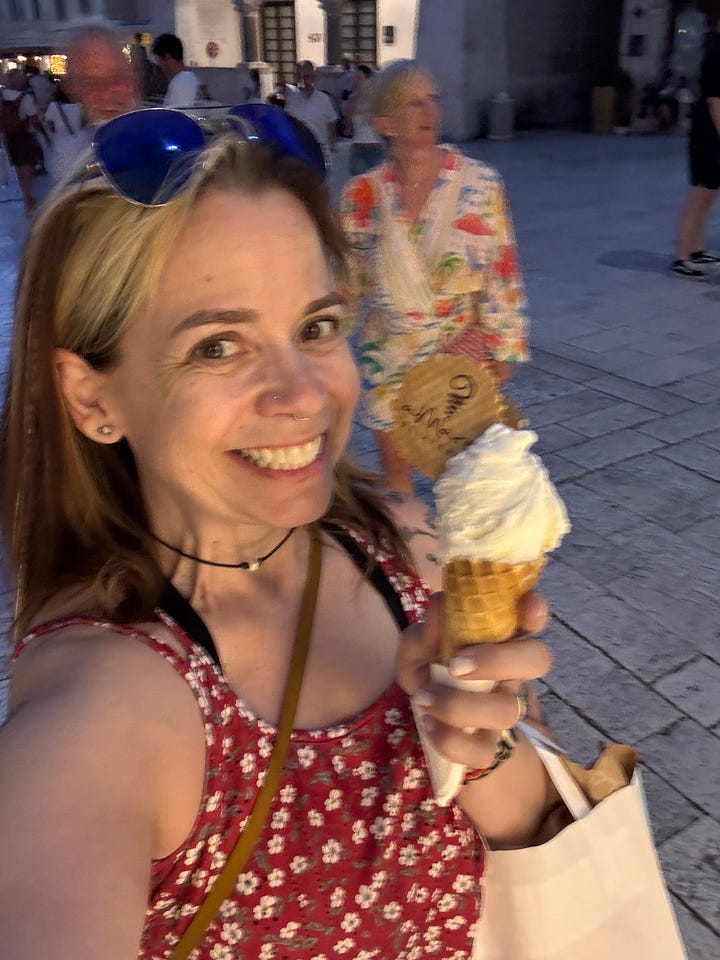
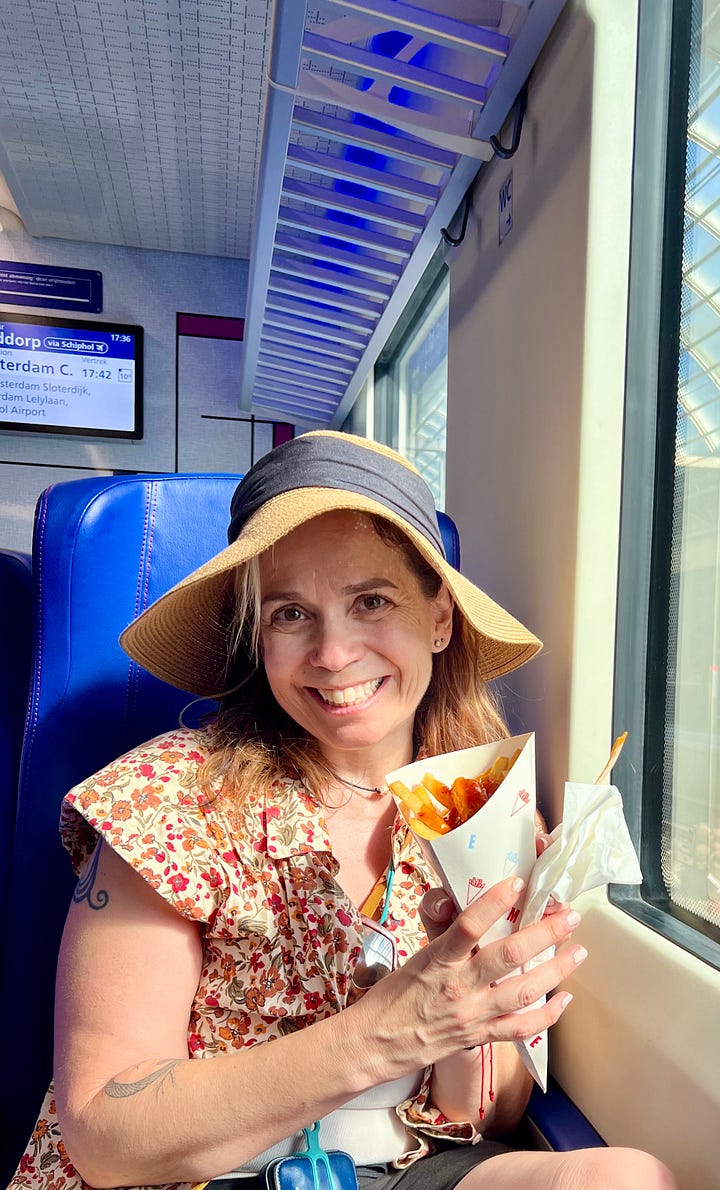
grrrl meets carbs I’m also working on a pitch for the USask’s TEDx event later this year. Being selected would be a long shot, but the process itself has already felt so worthwhile. I’ve really enjoyed returning to my research and asking how its central ideas might speak to people beyond academia. And should I actually get accepted, it would be the most delightfully meta experience for this speech teacher to give a TEDx talk.
This week, I completely flaked on not one, but TWO appointments. Very unlike me. Apparently, my brain is still rebooting. Naturally, the only sensible response is to go fully analogue, visit the bougie paper store, and buy an unnecessarily fancy planner.
I may have overdone it with the jam-making this year, y’all. At the moment, I have what feels like a lifetime supply of raspberry basil, raspberry lemon, raspberry rhubarb, blueberry basil, blueberry lemon, strawberry lemon, and strawberry rhubarb. Do not tempt me to make any more. (And if any of y’all would like a jar, they are shelf-stable—assuming you can resist opening them right away. Let me know, and I’ll save one for you!)
We also got new Sunday-morning coffee cups for me and the mister, made by an an Edmonton creator:

Since finishing my dissertation, I’ve lost around 15 pounds. I think the combination of no longer being tied to my laptop, longer spring and summer days, a much happier post-defence mindset, and a bunch of other good choices has made a real difference.
Reading: so many terrible thrillers.
Watching: every Love Is Blind franchise the minute it drops.
Listening: the audiobook of Reader, Come Home: The Reading Brain in a Digital World by Maryanne Wolf. And yes, I see the irony.



Meme of the week: